Jade Burial Suit of Prince Liu Sheng
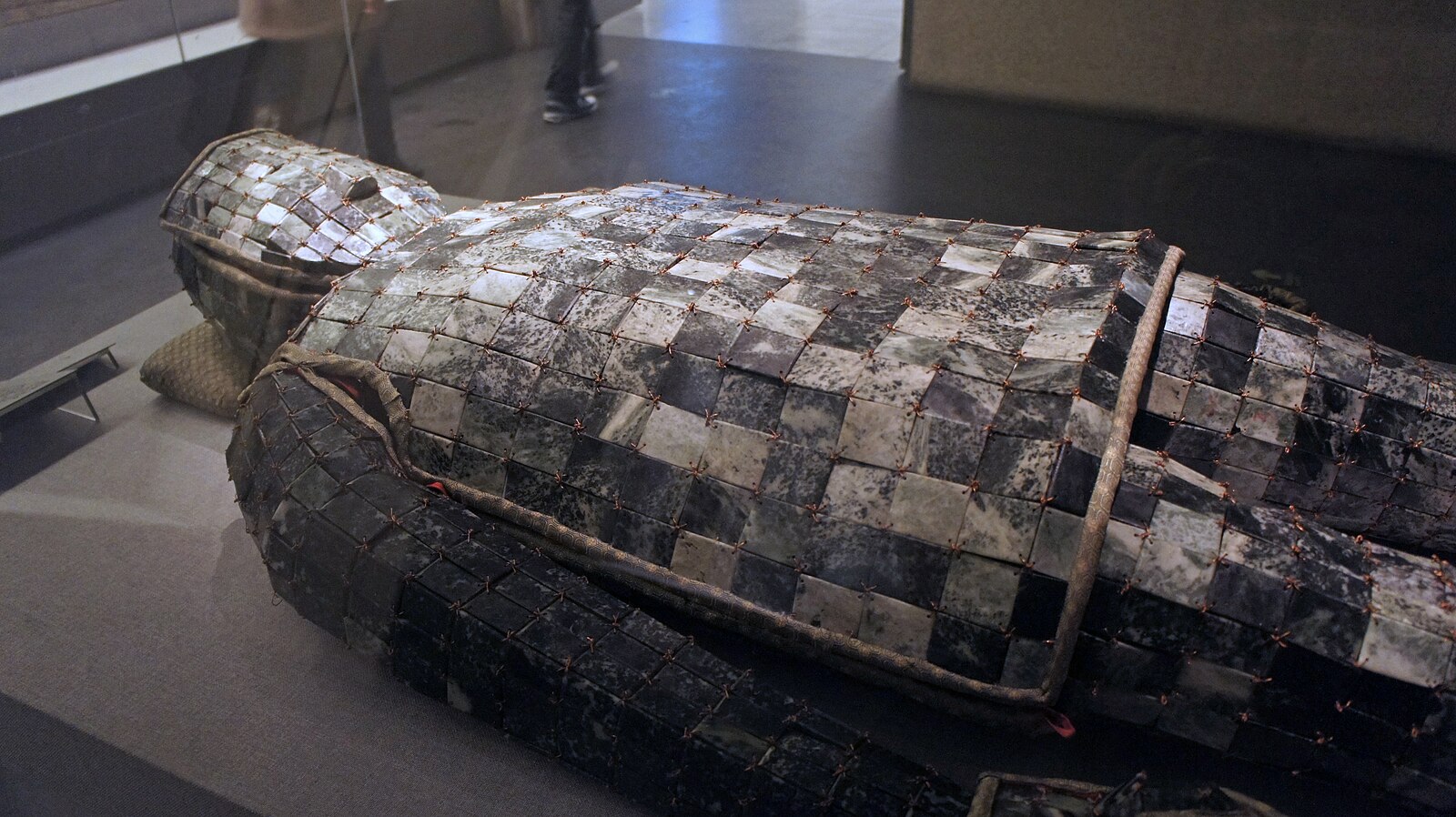
An entire suit made of 2,498 jade tiles sewn together with 1,100 grams of gold wire — built to grant immortality to a Han prince.
The Story
Prince Liu Sheng, brother of Emperor Wu of Han, believed that jade could preserve the body and grant immortality. Upon his death around 113 BC, he was buried in this extraordinary full-body suit crafted from 2,498 individual jade tiles, each meticulously cut to shape and connected with 1,100 grams of gold wire. The crafting is estimated to have taken over 10 years. Tragically for the prince, jade did not preserve his body — only fragments of bone remained when the tomb was opened in 1968. But the suit itself survived 2,000 years in pristine condition, becoming one of the most iconic symbols of Han Dynasty belief in the afterlife.
Why It Matters
One of the finest examples of Han Dynasty funerary art, revealing the ancient Chinese aristocracy's obsession with immortality and the extraordinary lengths they pursued it.
Frequently Asked Questions
1. What is Jade Burial Suit of Prince Liu Sheng?
An entire suit made of 2,498 jade tiles sewn together with 1,100 grams of gold wire — built to grant immortality to a Han prince.
2. When was Jade Burial Suit of Prince Liu Sheng made?
Jade Burial Suit of Prince Liu Sheng dates to c. 113 BC, during the Western Han Dynasty.
3. Where can I see Jade Burial Suit of Prince Liu Sheng?
Jade Burial Suit of Prince Liu Sheng is held by National Museum of China in China. Check the linked collection record or museum website before visiting because display rotations can change.
4. Why is Jade Burial Suit of Prince Liu Sheng important?
One of the finest examples of Han Dynasty funerary art, revealing the ancient Chinese aristocracy's obsession with immortality and the extraordinary lengths they pursued it.
5. What is Jade Burial Suit of Prince Liu Sheng made of?
Jade Burial Suit of Prince Liu Sheng is classified as jade and made of Jade tiles with gold wire.
Fun Facts
It took an estimated 10+ years for skilled artisans to make
Only royals and the highest nobles were permitted gold-wire jade suits
Despite the jade, Liu Sheng's body completely decomposed
The practice was eventually banned by later emperors as too extravagant
Where to See It
Public collections holding this artifact or closely related pieces.
In Popular Culture
Modern games, films, and TV shows that draw on this artifact.
The Connection
The show's recurring emphasis on jade as spiritually protective — worn at funerals, given at births, exchanged at crises — echoes the Han Dynasty belief system that produced jade burial suits.

The Connection
Jade tokens, pendants, and protective objects in cultivation fiction descend from the same belief system that made Han elites wrap their dead in jade.
Part of These Themes
Jade and the Quest for Immortality
Why emperors were buried in stone suits sewn with gold
The Chinese believed jade could preserve the body, guide the soul, and command respect from heaven. These beliefs produced some of the most extraordinary funerary art in world history.
1 artifact →
Imperial Power and Court Life
How objects made authority visible inside the palace
From bronze cauldrons and jade suits to porcelain vases and court paintings, imperial China turned objects into a language of rank, legitimacy, and ritual performance.
5 artifacts →

Prehistoric Jade Cultures of China
5,000 Years Before the Bronze Age: Jade, Ritual, and the Origins of Chinese Civilization
Long before bronze or writing, Neolithic communities across China carved jade into dragons, discs, and ritual objects — establishing the material's sacred status that would endure for 7,000 years.
2 artifacts →
Related Artifacts

Painting
Along the River During the Qingming Festival
One of the most celebrated paintings in the entire history of Chinese art — a panoramic masterpiece capturing daily life along the Bian River during the Qingming Festival in the Song Dynasty capital of Kaifeng.
Bronze
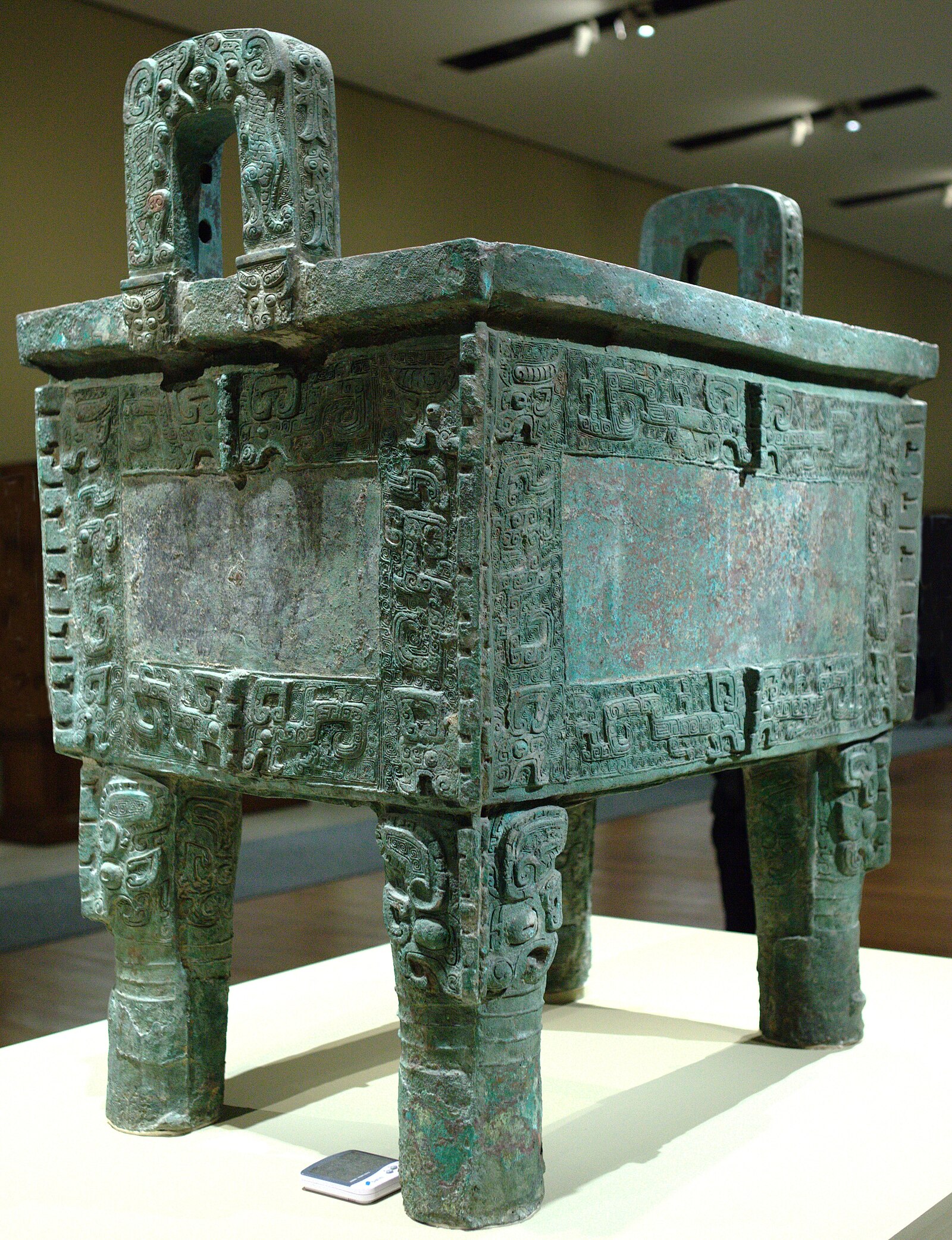
Simuwu Ding (Houmuwu Ding)
The heaviest piece of bronze work ever found in the ancient world — a monumental ritual vessel weighing 832.84 kg that required the coordinated effort of hundreds of craftsmen.
Sources & References
- ·Wikipedia — Jade burial suit(CC-BY-SA 3.0)
Content informed by the sources above. Where Wikipedia text is used, it is licensed under CC-BY-SA 3.0.