Terracotta Warriors
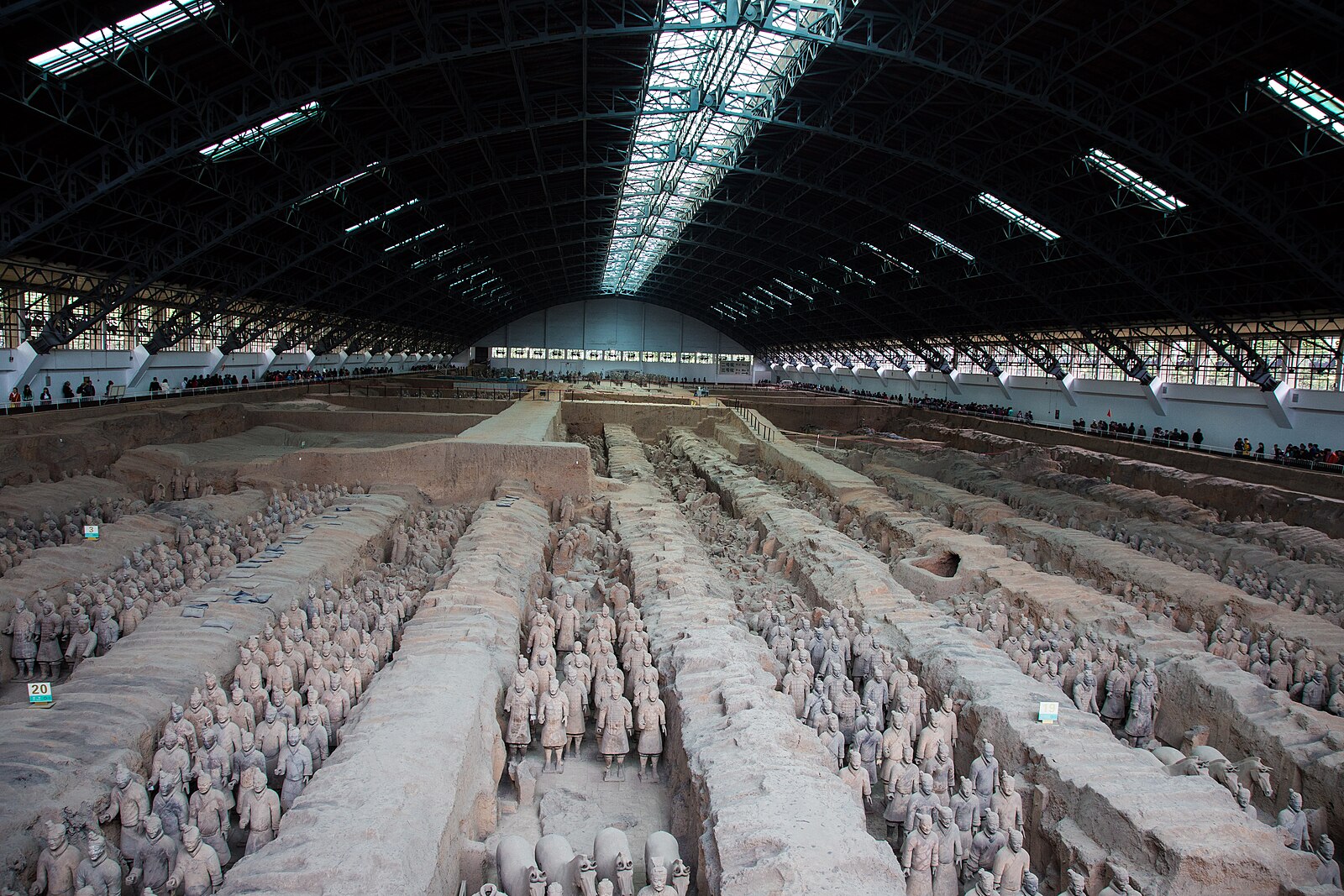
An army of over 8,000 life-sized clay soldiers, each with unique facial features, built to guard China's first emperor in the afterlife.
The Story
In 1974, farmers digging a well near Xi'an stumbled upon one of the most spectacular archaeological discoveries in human history. Buried for over 2,200 years, the Terracotta Army was commissioned by Qin Shi Huang, China's first emperor, to accompany him in the afterlife. Over 8,000 soldiers, 130 chariots, 520 horses, and 150 cavalry horses have been unearthed so far. The most remarkable feature: every single warrior has a unique face. No two are identical. They originally bore vivid paint — red, green, blue, purple — most of which faded within minutes of exposure to air upon excavation. Ancient records suggest the full tomb complex covers 98 square kilometers, and the emperor's actual burial chamber — rumored to contain rivers of mercury — remains sealed and unexcavated.
Why It Matters
The greatest archaeological discovery of the 20th century, revealing the military organization, artistry, and imperial ambition of China's first unified dynasty.
Frequently Asked Questions
1. What is Terracotta Warriors?
An army of over 8,000 life-sized clay soldiers, each with unique facial features, built to guard China's first emperor in the afterlife.
2. When was Terracotta Warriors made?
Terracotta Warriors dates to c. 210–209 BC, during the Qin Dynasty.
3. Where can I see Terracotta Warriors?
Terracotta Warriors is held by Emperor Qinshihuang's Mausoleum Site Museum in China. Check the linked collection record or museum website before visiting because display rotations can change.
4. Why is Terracotta Warriors important?
The greatest archaeological discovery of the 20th century, revealing the military organization, artistry, and imperial ambition of China's first unified dynasty.
5. What is Terracotta Warriors made of?
Terracotta Warriors is classified as sculpture and made of Terracotta (fired clay).
Fun Facts
No two warriors have the same face — over 8,000 unique portraits
They were originally painted in vivid colors that faded upon exposure to air
The emperor's actual tomb has never been opened
Ancient texts claim the tomb contains rivers of liquid mercury — soil tests confirm elevated mercury levels
Where to See It
Public collections holding this artifact or closely related pieces.
In Popular Culture
Modern games, films, and TV shows that draw on this artifact.
The Connection
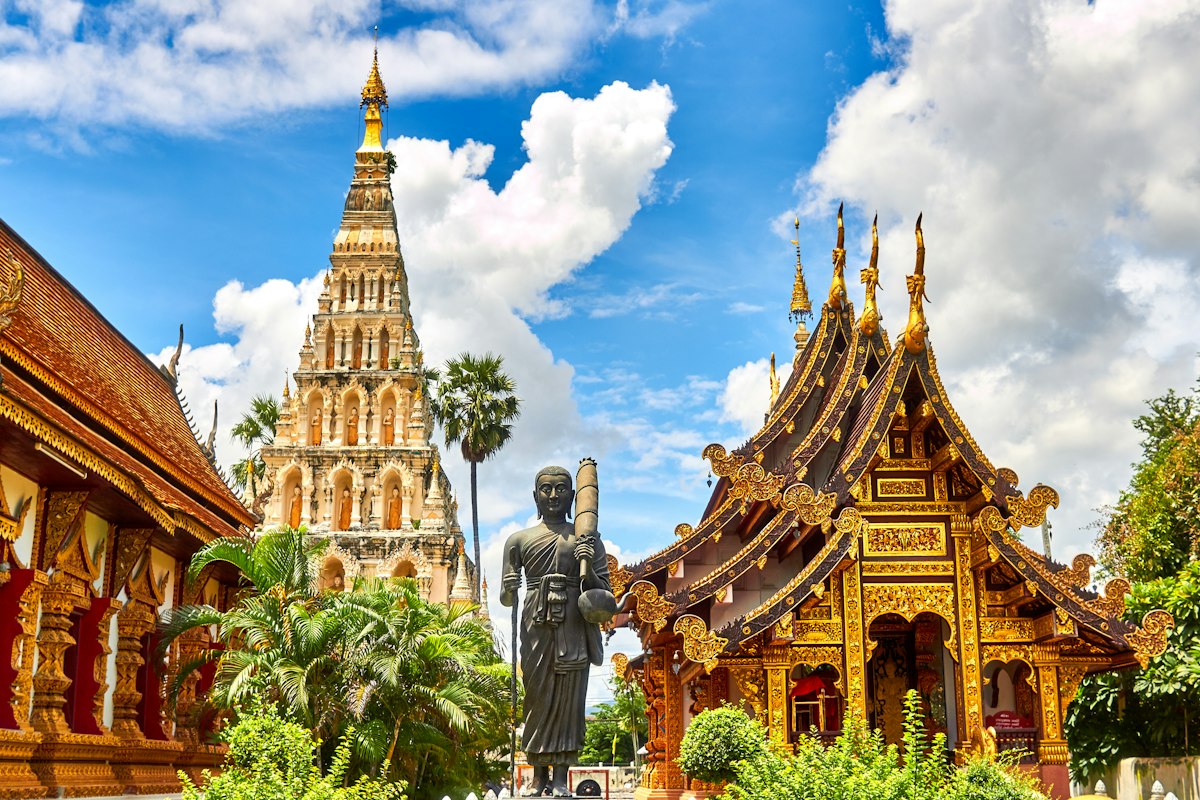
The film's most memorable military images — ranked soldiers, imperial command, mass mobilization — echo the visual power of the Terracotta Army, the ultimate image of Chinese soldiers turned into state spectacle.
The Connection
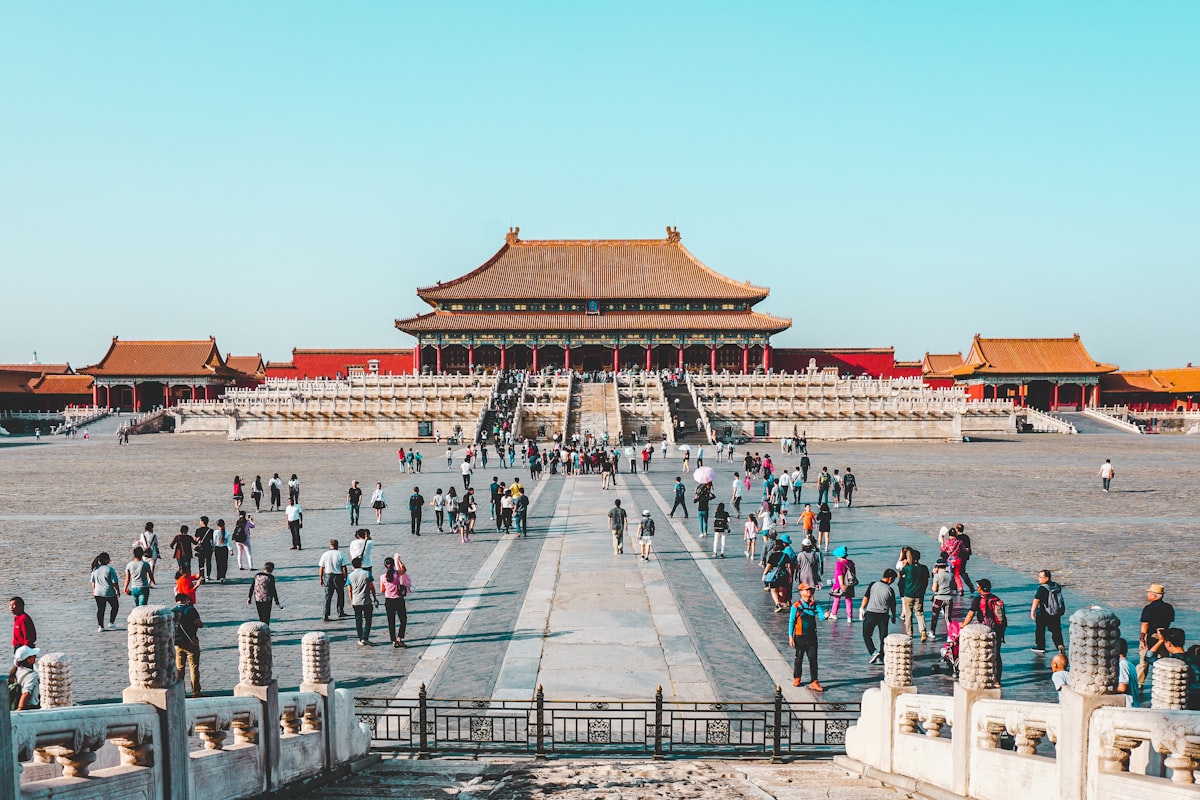
The game's ranked armies and battlefield formations draw on the same visual shock as the Qin Terracotta Army: state power multiplied into thousands of bodies.
Part of These Themes
Warriors, Weapons, and Empire
The material culture of conquest, defense, and military memory
Chinese military heritage is not only swords and soldiers. It includes bronze technology, mass production, tomb armies, court ritual, and the stories later dynasties told about heroic violence.
5 artifacts →
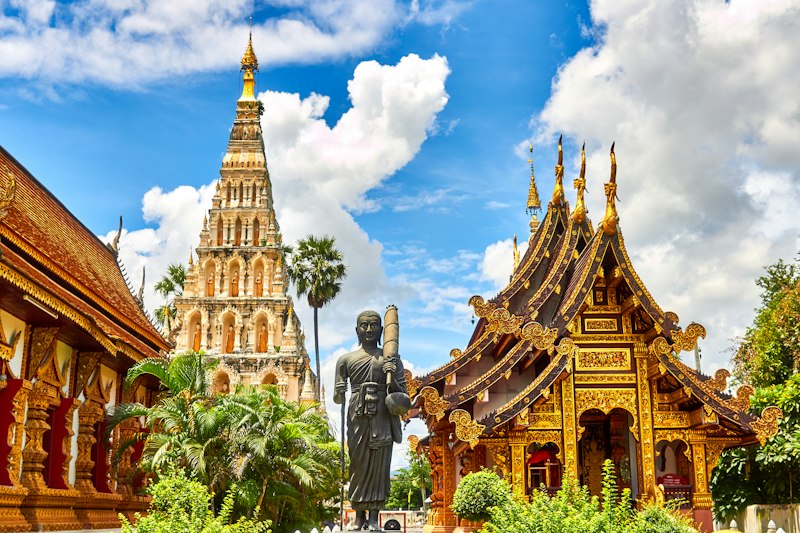
Qin Empire, Terracotta Army & Xi'an Heritage
The First Emperor's Underground State
The Terracotta Army is only one part of Qin Shi Huang's vast afterlife empire — a ritual-military landscape of clay soldiers, bronze chariots, weapons, acrobats, officials, and an unopened imperial tomb.
3 artifacts →
Related Artifacts
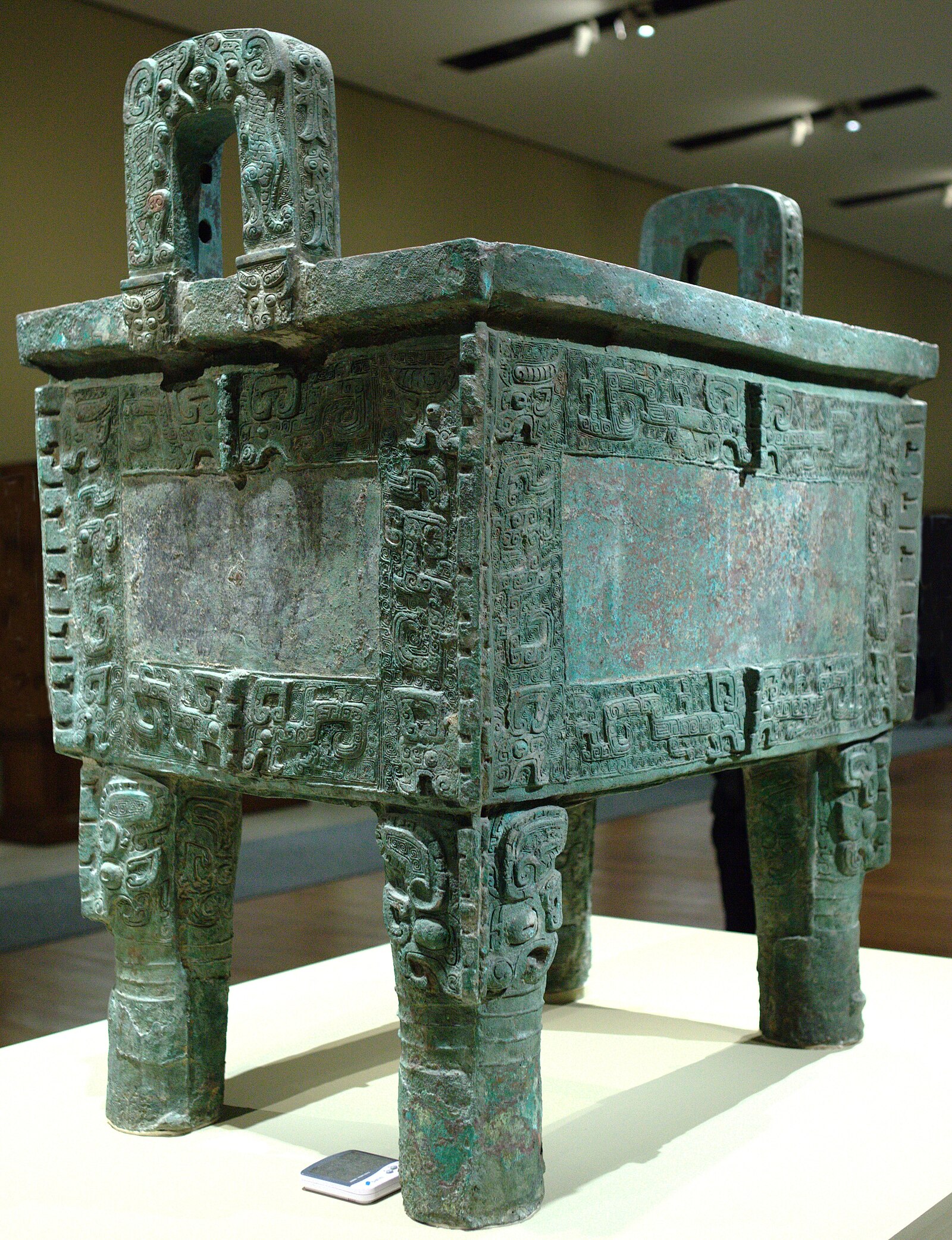
Bronze
Simuwu Ding (Houmuwu Ding)
The heaviest piece of bronze work ever found in the ancient world — a monumental ritual vessel weighing 832.84 kg that required the coordinated effort of hundreds of craftsmen.
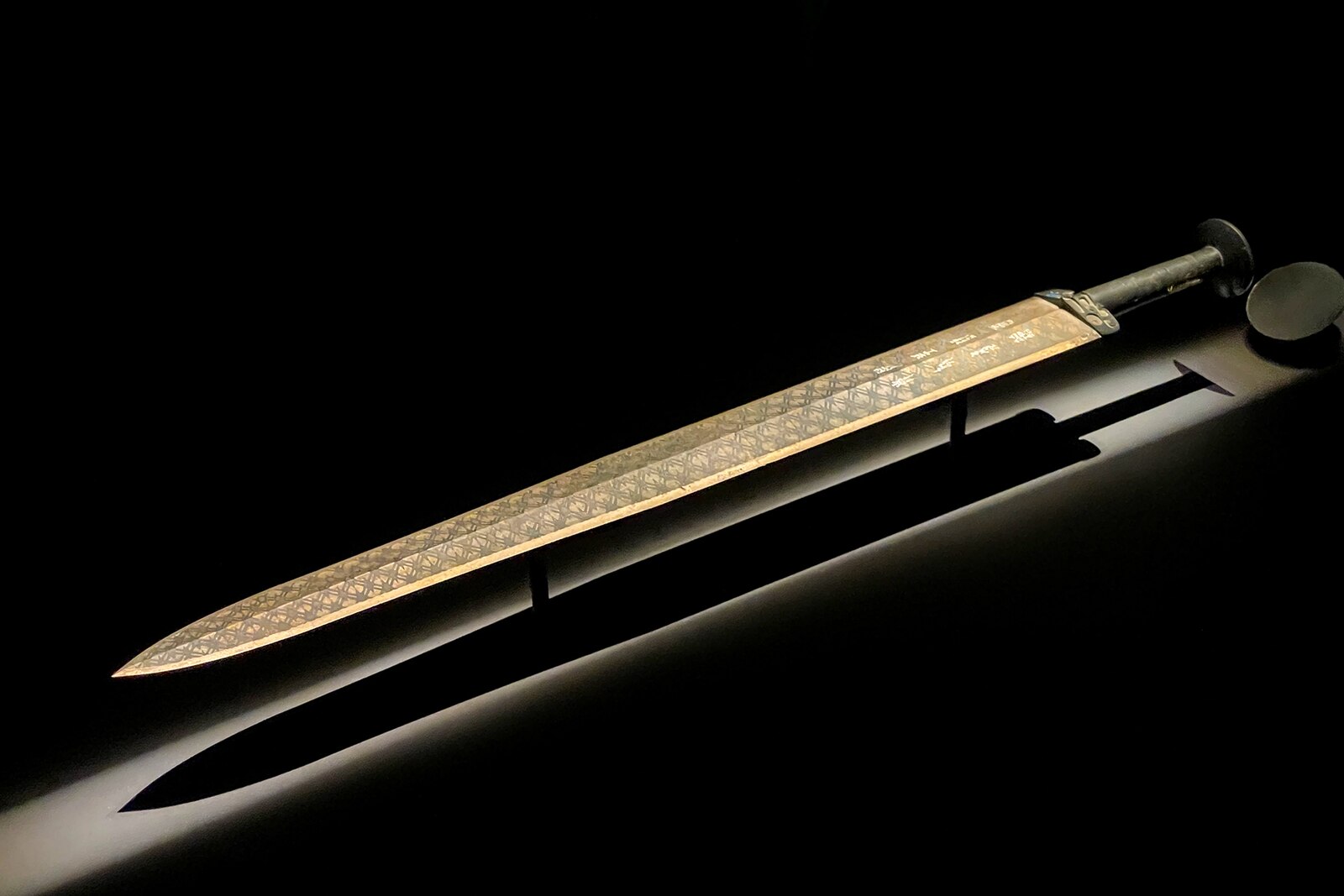
Weapons
Sword of Goujian
A 2,500-year-old sword found still razor-sharp and untarnished — a testament to ancient Chinese metallurgical genius.
Bronze
Bronze Chariot and Horses of Qin Shi Huang
Two half-life-size bronze chariots excavated near Qin Shi Huang's mausoleum — the most complex bronze vehicles ever found in ancient China, assembled from thousands of individually cast parts.
Sources & References
- ·Wikipedia — Terracotta Army(CC-BY-SA 3.0)
- ·UNESCO World Heritage: Mausoleum of the First Qin Emperor
Content informed by the sources above. Where Wikipedia text is used, it is licensed under CC-BY-SA 3.0.