Sword of Goujian
A 2,500-year-old sword found still razor-sharp and untarnished — a testament to ancient Chinese metallurgical genius.
The Story
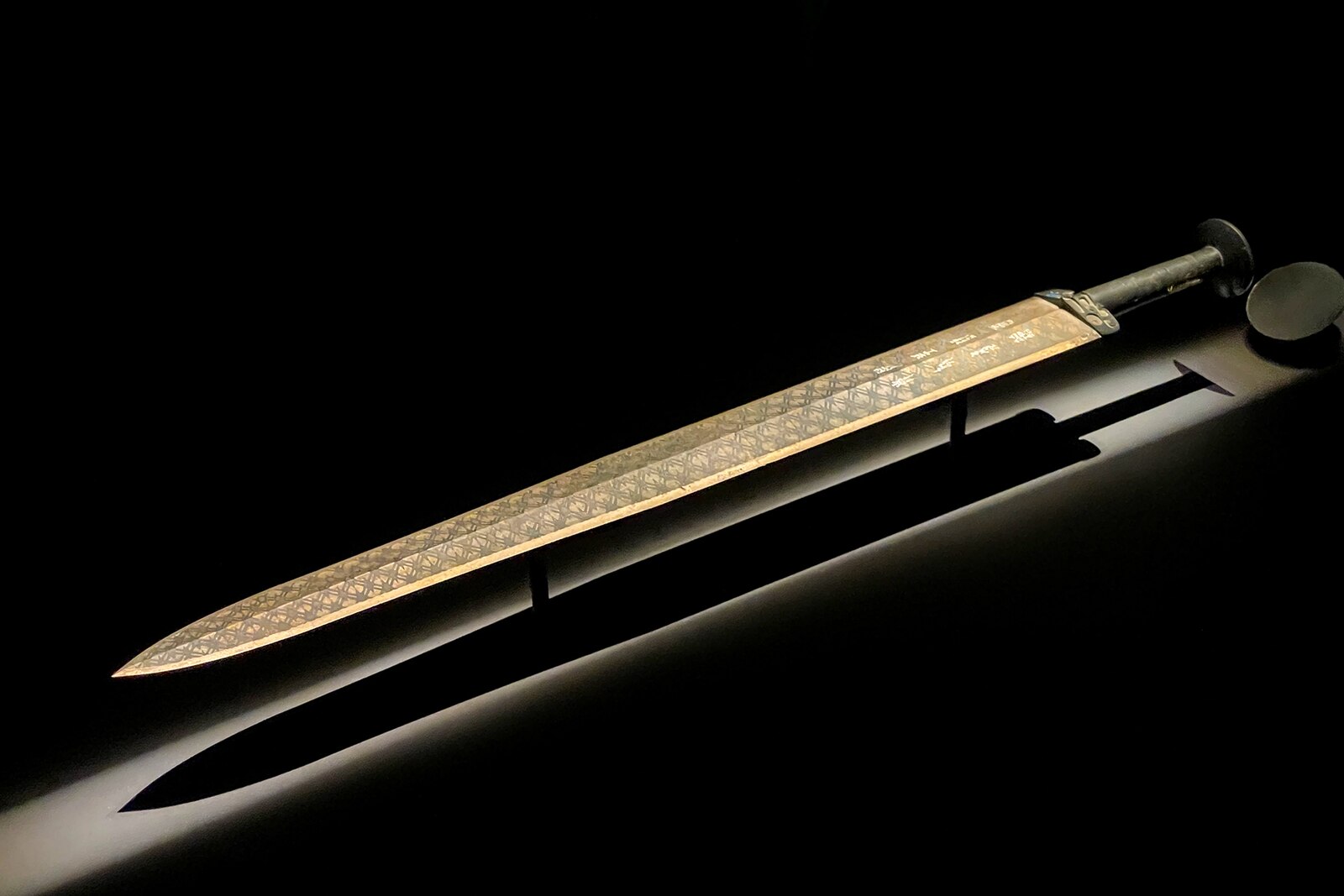
When archaeologists discovered this sword in a waterlogged tomb in Jiangling, Hubei in 1965, they were stunned: after 2,500 years underground, the blade was still razor-sharp and virtually free of corrosion. A test-cut through 20 layers of paper confirmed its edge. The eight-character inscription on the blade reads: 'King of Yue' and 'made this sword for his personal use,' identifying it as the personal weapon of Goujian — the legendary king who endured humiliation, slept on brushwood, and tasted gall to motivate himself before ultimately conquering the rival state of Wu. The blade's incredible preservation is attributed to a chromium-rich oxide layer — a form of anti-corrosion technology that would not be 'reinvented' in the West until the 20th century.
Why It Matters
Demonstrates that ancient Chinese metallurgists had mastered chromium-based anti-corrosion technology 2,000+ years before modern science.
Frequently Asked Questions
1. What is Sword of Goujian?
A 2,500-year-old sword found still razor-sharp and untarnished — a testament to ancient Chinese metallurgical genius.
2. When was Sword of Goujian made?
Sword of Goujian dates to c. 510–465 BC, during the Spring and Autumn Period.
3. Where can I see Sword of Goujian?
Sword of Goujian is held by Hubei Provincial Museum in China. Check the linked collection record or museum website before visiting because display rotations can change.
4. Why is Sword of Goujian important?
Demonstrates that ancient Chinese metallurgists had mastered chromium-based anti-corrosion technology 2,000+ years before modern science.
5. What is Sword of Goujian made of?
Sword of Goujian is classified as weapons and made of Bronze with turquoise and blue crystal inlay.
Fun Facts
Still sharp enough to cut paper after 2,500 years
Contains a chromium oxide anti-corrosion layer — technology 're-discovered' in the 1900s
King Goujian's story of perseverance is one of China's most famous legends
The sword was found alongside 20+ other weapons, but only this one was pristine
Where to See It
Public collections holding this artifact or closely related pieces.
In Popular Culture
Modern games, films, and TV shows that draw on this artifact.

The Connection
Mulan's sword is a moral object as much as a weapon. The Sword of Goujian shows how Chinese blades could function as royal identity, technical marvel, and legendary symbol at once.

The Connection
The show's named swords inherit the Chinese idea of the blade as biography. The Sword of Goujian is the clearest surviving object that joins technical perfection, royal identity, and legend.

The Connection
Hero weapons in Three Kingdoms storytelling inherit the prestige of earlier named blades like the Sword of Goujian, where metallurgy and legend fuse.
The Connection
The show's world runs on sword prestige, military honor, and named blades as extensions of a warrior's identity — a tradition stretching back to Spring and Autumn swords like the Sword of Goujian.
Part of These Themes

Warriors, Weapons, and Empire
The material culture of conquest, defense, and military memory
Chinese military heritage is not only swords and soldiers. It includes bronze technology, mass production, tomb armies, court ritual, and the stories later dynasties told about heroic violence.
5 artifacts →

Qin Empire, Terracotta Army & Xi'an Heritage
The First Emperor's Underground State
The Terracotta Army is only one part of Qin Shi Huang's vast afterlife empire — a ritual-military landscape of clay soldiers, bronze chariots, weapons, acrobats, officials, and an unopened imperial tomb.
3 artifacts →
Related Artifacts
Bronze
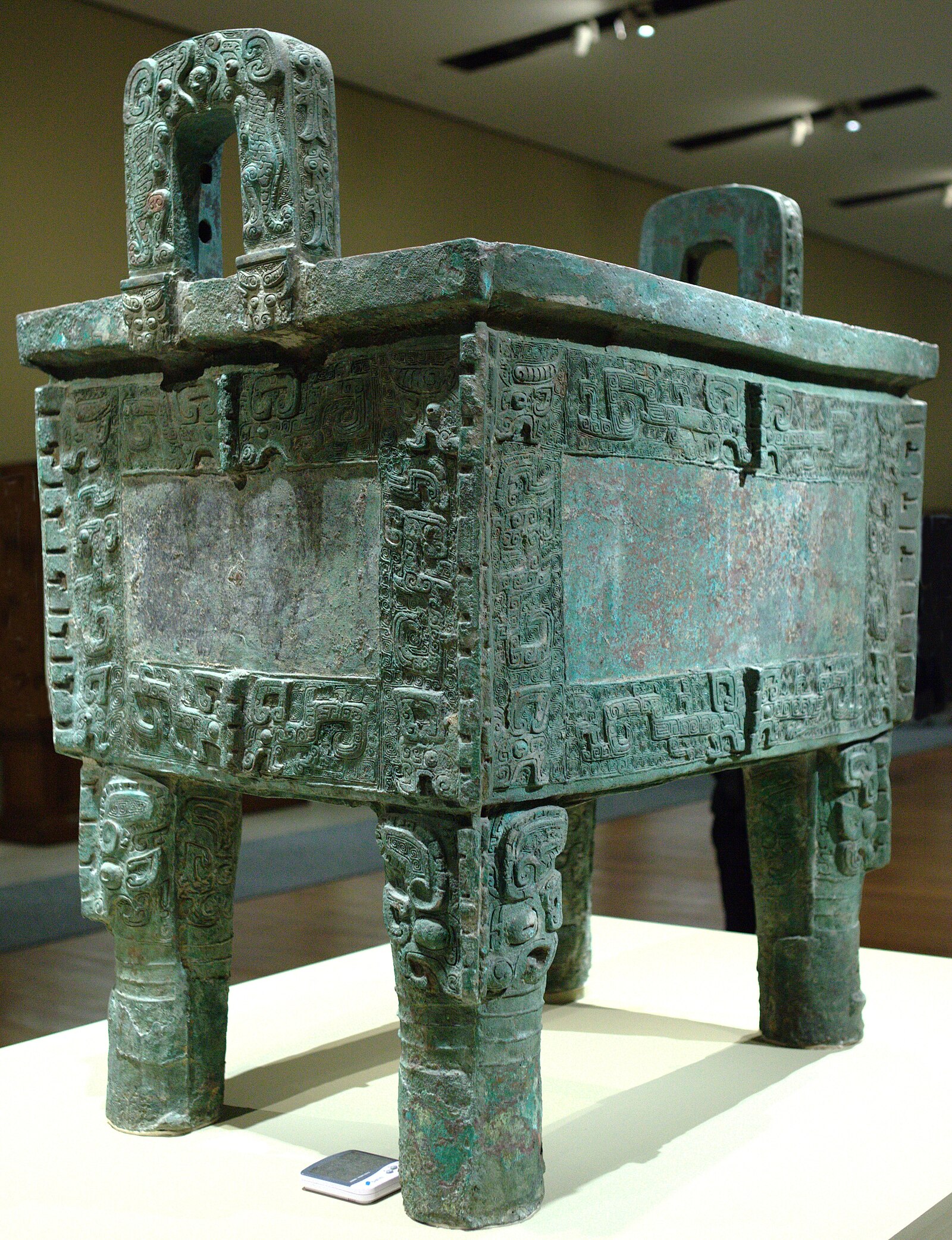
Simuwu Ding (Houmuwu Ding)
The heaviest piece of bronze work ever found in the ancient world — a monumental ritual vessel weighing 832.84 kg that required the coordinated effort of hundreds of craftsmen.
Bronze / Musical Instrument
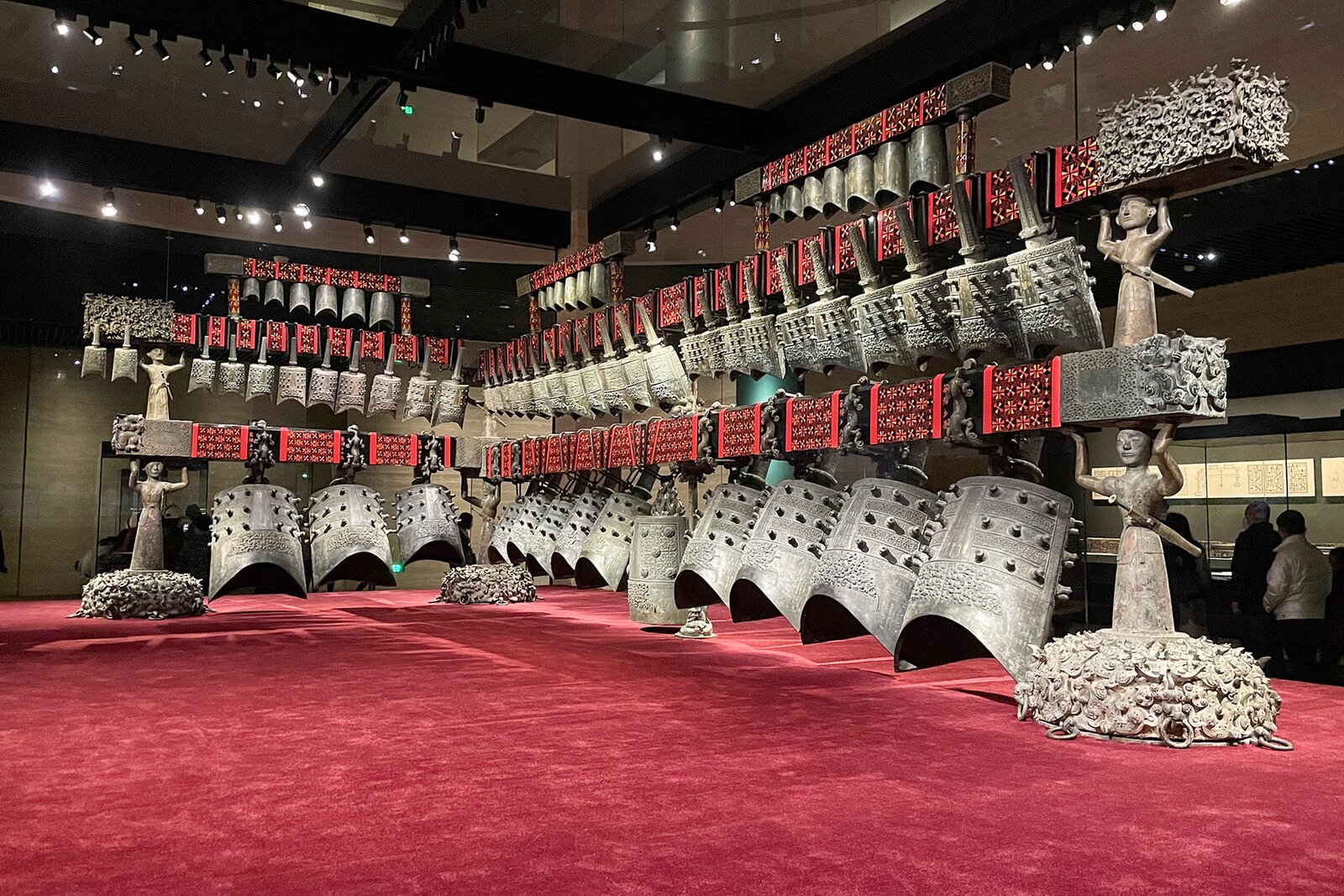
Bianzhong of Marquis Yi of Zeng
A set of 65 bronze bells that, after 2,400 years underground, can still produce music spanning five octaves with perfect tonal accuracy.
Sources & References
- ·Wikipedia — Sword of Goujian(CC-BY-SA 3.0)
Content informed by the sources above. Where Wikipedia text is used, it is licensed under CC-BY-SA 3.0.