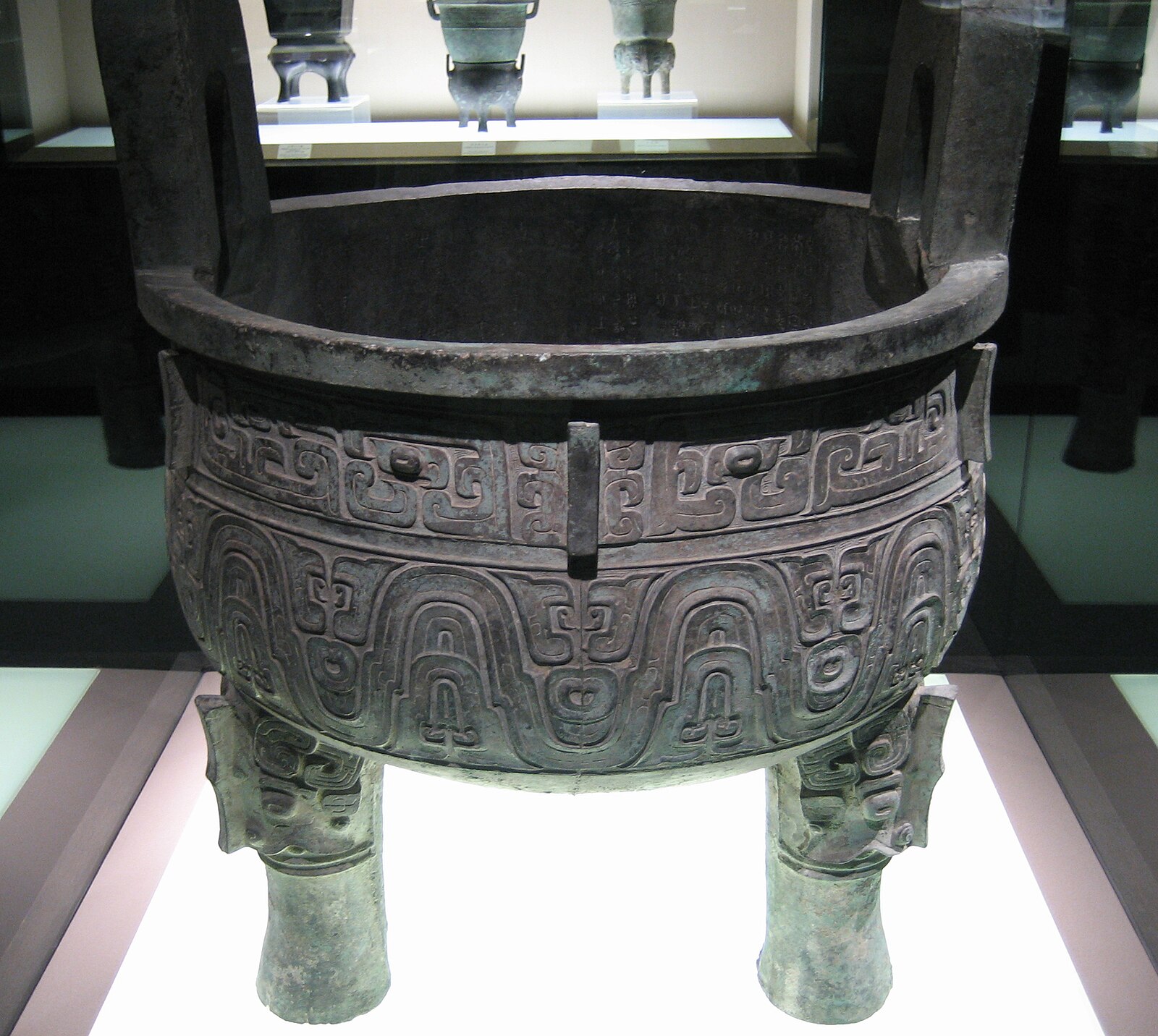
Da Ke Ding (Large Ke Tripod)
One of the most important inscribed bronze vessels of the Western Zhou Dynasty, bearing 290 characters that document a key moment in Chinese feudal history.
The Story
The Da Ke Ding is a monumental bronze tripod cast during the Western Zhou Dynasty, approximately 3,000 years ago. Its interior bears an inscription of 290 characters — one of the longest and most historically significant bronze inscriptions known — recording the deeds of a nobleman named Ke and the royal grants he received. The vessel survived millennia of turmoil. In the late Qing Dynasty, it was acquired by the Pan family of Suzhou, who buried it during the Taiping Rebellion and later hid it during the Japanese invasion. Three generations of the Pan family protected this national treasure at great personal risk before donating it to the Shanghai Museum in 1951.
Why It Matters
Its inscription is a primary historical source for understanding Western Zhou political structure, and the vessel's survival story embodies Chinese dedication to cultural preservation.
Frequently Asked Questions
1. What is Da Ke Ding (Large Ke Tripod)?
One of the most important inscribed bronze vessels of the Western Zhou Dynasty, bearing 290 characters that document a key moment in Chinese feudal history.
2. When was Da Ke Ding (Large Ke Tripod) made?
Da Ke Ding (Large Ke Tripod) dates to c. 10th century BC, during the Western Zhou Dynasty.
3. Where can I see Da Ke Ding (Large Ke Tripod)?
Da Ke Ding (Large Ke Tripod) is held by Shanghai Museum in China. Check the linked collection record or museum website before visiting because display rotations can change.
4. Why is Da Ke Ding (Large Ke Tripod) important?
Its inscription is a primary historical source for understanding Western Zhou political structure, and the vessel's survival story embodies Chinese dedication to cultural preservation.
5. What is Da Ke Ding (Large Ke Tripod) made of?
Da Ke Ding (Large Ke Tripod) is classified as bronze and made of Bronze.
Fun Facts
The Pan family protected it for over 80 years through war, rebellion, and occupation
Its 290-character inscription is one of the longest ever found on a bronze vessel
The Pan family buried it underground TWICE to protect it from invaders
It was voluntarily donated to the Shanghai Museum in 1951
Where to See It
Public collections holding this artifact or closely related pieces.
In Popular Culture
Modern games, films, and TV shows that draw on this artifact.
The Connection
The inscribed ritual vessels passed between noble houses in the film mirror the real function of inscribed bronze vessels like the Da Ke Ding in Zhou Dynasty political life.
The Connection
Faction legitimacy in the game depends on titles, grants, and ritual authority — exactly the political world documented in Western Zhou bronze inscriptions like the Da Ke Ding.

The Connection
Political legitimacy in the show depends on titles, ancestral rites, and imperial grants — the inscribed bronze tradition of recording such authority reaches back to Western Zhou vessels like the Da Ke Ding.
Part of These Themes

Bronze Dings Through the Ages
The ritual cauldrons that embodied Chinese state power
The ding (鼎) — a three- or four-legged bronze cauldron — was not just a cooking vessel. For 2,000 years, it was the political and spiritual symbol of Chinese civilization itself.
3 artifacts →
Imperial Power and Court Life
How objects made authority visible inside the palace
From bronze cauldrons and jade suits to porcelain vases and court paintings, imperial China turned objects into a language of rank, legitimacy, and ritual performance.
5 artifacts →

Warriors, Weapons, and Empire
The material culture of conquest, defense, and military memory
Chinese military heritage is not only swords and soldiers. It includes bronze technology, mass production, tomb armies, court ritual, and the stories later dynasties told about heroic violence.
5 artifacts →
Related Artifacts

Painting
Along the River During the Qingming Festival
One of the most celebrated paintings in the entire history of Chinese art — a panoramic masterpiece capturing daily life along the Bian River during the Qingming Festival in the Song Dynasty capital of Kaifeng.
Bronze
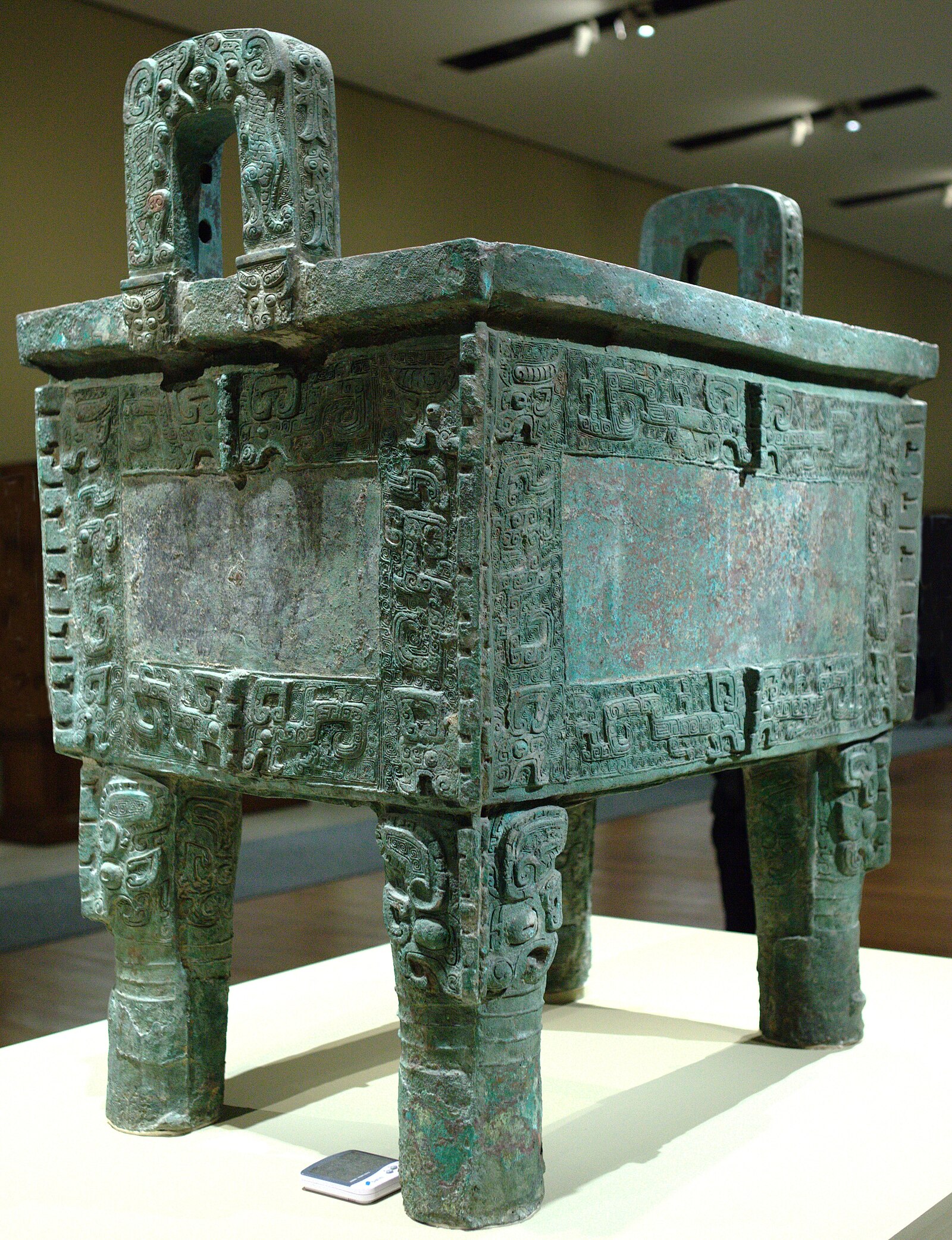
Simuwu Ding (Houmuwu Ding)
The heaviest piece of bronze work ever found in the ancient world — a monumental ritual vessel weighing 832.84 kg that required the coordinated effort of hundreds of craftsmen.
Sources & References
- ·Wikipedia — Da Ke ding(CC-BY-SA 3.0)
Content informed by the sources above. Where Wikipedia text is used, it is licensed under CC-BY-SA 3.0.