The Story
When a Zhou Dynasty king asked a messenger how heavy the Nine Tripods of the Zhou were, he was not asking about metallurgy. He was asking whether the kingdom was his to take. To possess the dings was to possess the Mandate of Heaven. From the monumental Simuwu Ding of the late Shang — the heaviest ancient bronze vessel ever discovered — to the inscription-rich Da Ke Ding of the Western Zhou, dings are among the most concentrated vessels of Chinese political, religious, and artistic evolution. Their inscriptions are primary sources for Bronze Age history; their forms trace the shift from ritual awe to refined aristocratic taste. This theme walks through the evolution of the ding across a millennium, from the supernatural heft of Shang ritual to the literary elegance of Zhou court life.
Artifacts in This Theme
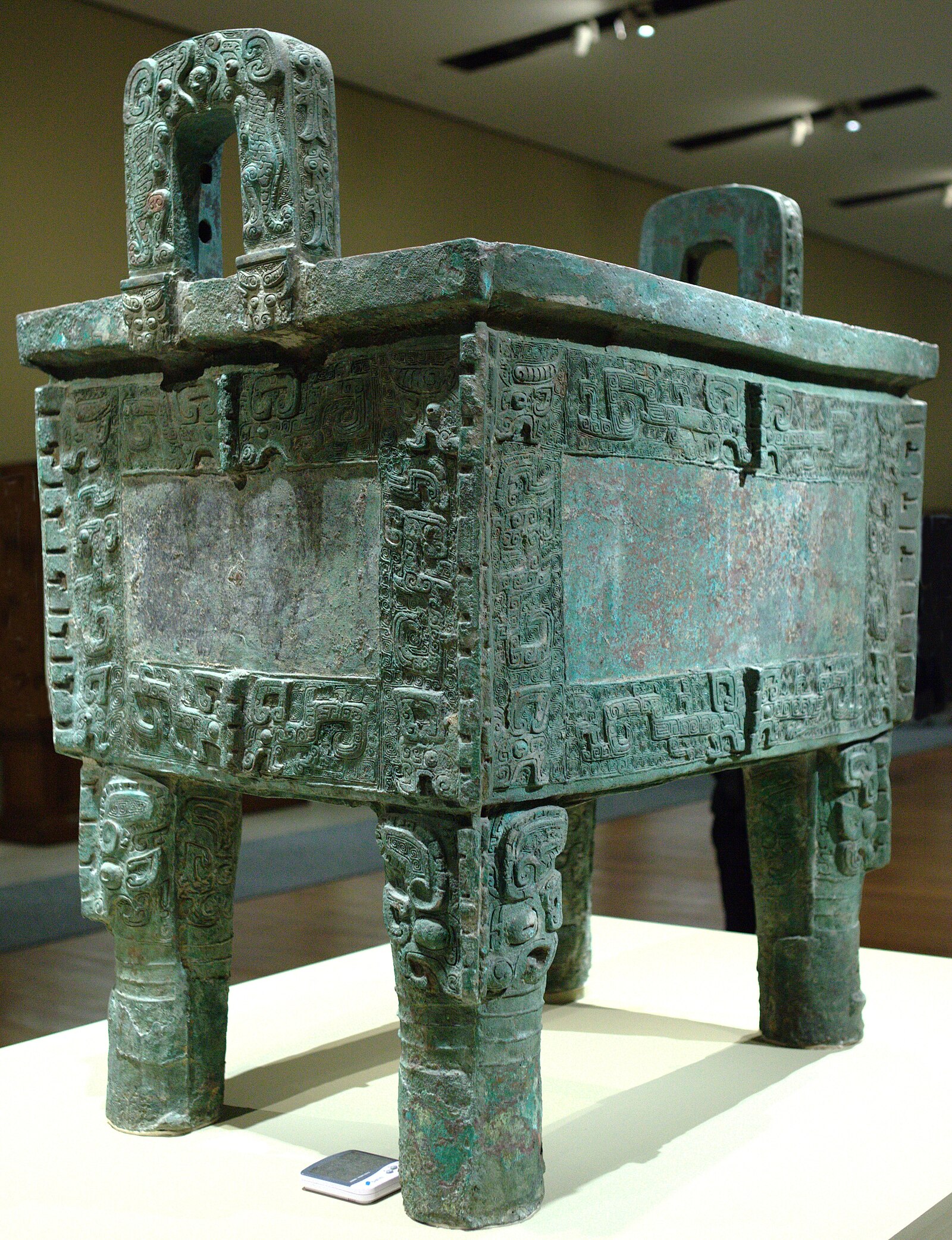
Bronze
Simuwu Ding (Houmuwu Ding)
The heaviest piece of bronze work ever found in the ancient world — a monumental ritual vessel weighing 832.84 kg that required the coordinated effort of hundreds of craftsmen.
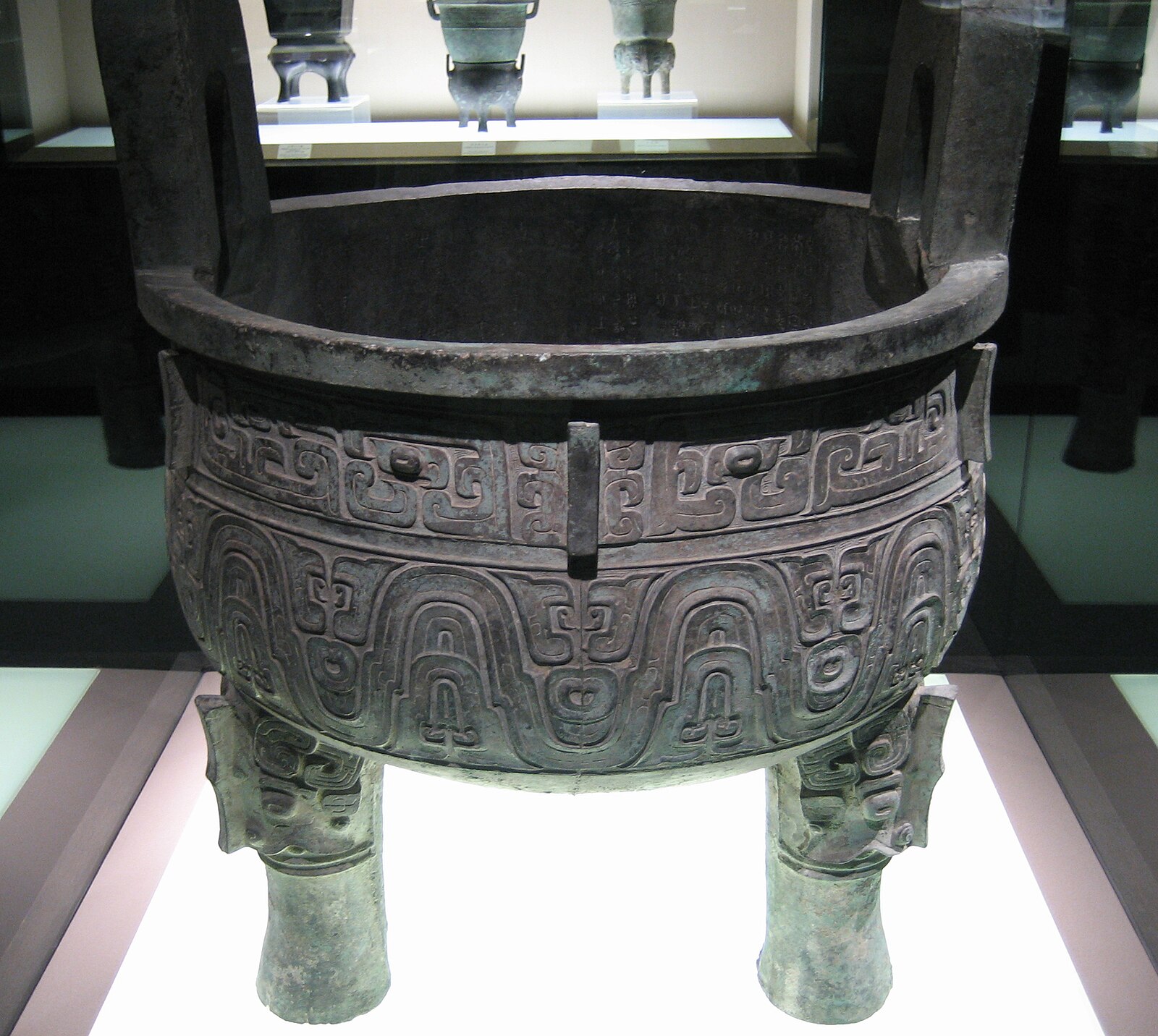
Bronze
Da Ke Ding (Large Ke Tripod)
One of the most important inscribed bronze vessels of the Western Zhou Dynasty, bearing 290 characters that document a key moment in Chinese feudal history.

Bone / Writing
Oracle Bones of Yinxu
The earliest substantial corpus of Chinese writing: divination inscriptions carved into bones and turtle shells at the Shang capital of Yinxu, recording royal questions about war, harvest, childbirth, weather, and ancestors.
Where to See Them
National Museum of China
Shanghai Museum
Yinxu Museum
In Popular Culture

2023 · Beijing Culture
Creation of the Gods I: Kingdom of Storms
An epic adaptation of the Ming Dynasty mythological novel Fengshen Yanyi, set during the fall of the Shang Dynasty — the same historical moment as the Simuwu Ding and Sanxingdui civilization.
5 artifacts →

2020 · miHoYo / HoYoverse
Genshin Impact — Liyue
Liyue is the Chinese-inspired region of Genshin Impact, a free-to-play open-world RPG with over 60 million monthly active players worldwide.
3 artifacts →
Frequently Asked
What is the "Bronze Dings Through the Ages" theme about?
The ding (鼎) — a three- or four-legged bronze cauldron — was not just a cooking vessel. For 2,000 years, it was the political and spiritual symbol of Chinese civilization itself.
Which artifacts are part of "Bronze Dings Through the Ages"?
This theme groups 3 artifacts, including Simuwu Ding (Houmuwu Ding), Da Ke Ding (Large Ke Tripod), Oracle Bones of Yinxu. Each entry on this page links to the artifact's full record with provenance, dating, and museum source.
Where can I see the artifacts in this theme in person?
The pieces in this theme are currently held by National Museum of China, Shanghai Museum, and Yinxu Museum. Some institutions rotate their displays, so we recommend checking the museum's website before visiting.
Is this theme based on academic sources?
Yes — every claim links to a primary or scholarly source, including Wikipedia — Ding (vessel). The full list of references is shown in the sidebar of this page.
Why is "Simuwu Ding (Houmuwu Ding)" considered iconic for this theme?
The heaviest piece of bronze work ever found in the ancient world — a monumental ritual vessel weighing 832.84 kg that required the coordinated effort of hundreds of craftsmen.