Cultural Context
Director Wuershan consulted archaeologists and museum curators to reconstruct the material culture of the late Shang Dynasty. The film's costume design, ritual vessels, architectural details, and oracle bone imagery are grounded in archaeological finds rather than later-dynasty stereotypes. Bronze ritual vessels, jade ornaments, and chariot reconstructions were all based on excavated originals. For viewers, the film functions as the most historically grounded depiction of Shang Dynasty material culture yet produced on screen — effectively a visual companion to the bronze galleries of the National Museum of China.
Real Artifacts Behind the Work
5 direct connections to Chinese cultural heritage.
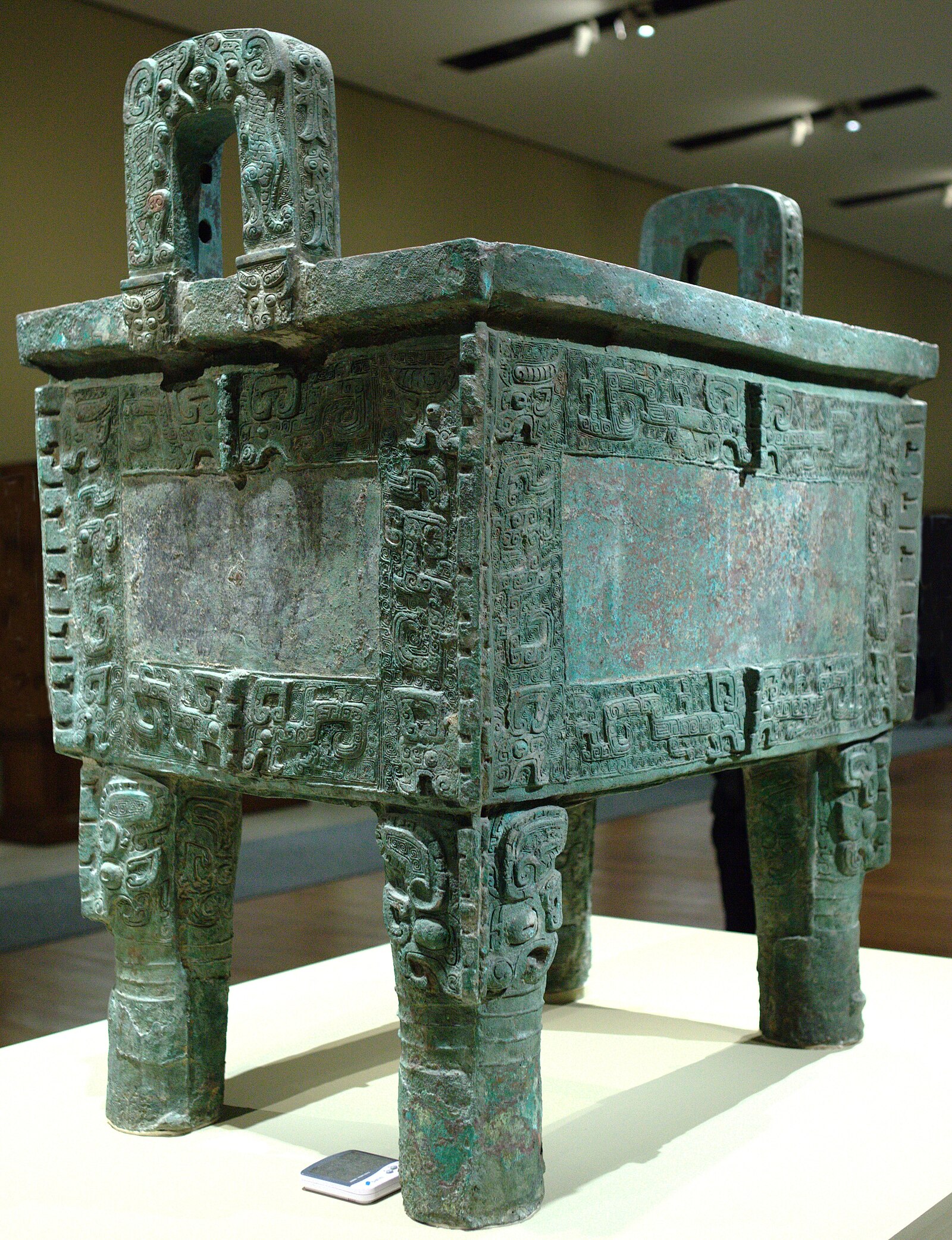
The Connection
Shang court rituals in the film prominently feature massive bronze dings modeled directly on the Simuwu Ding and other major Anyang-period vessels.
Read the full story →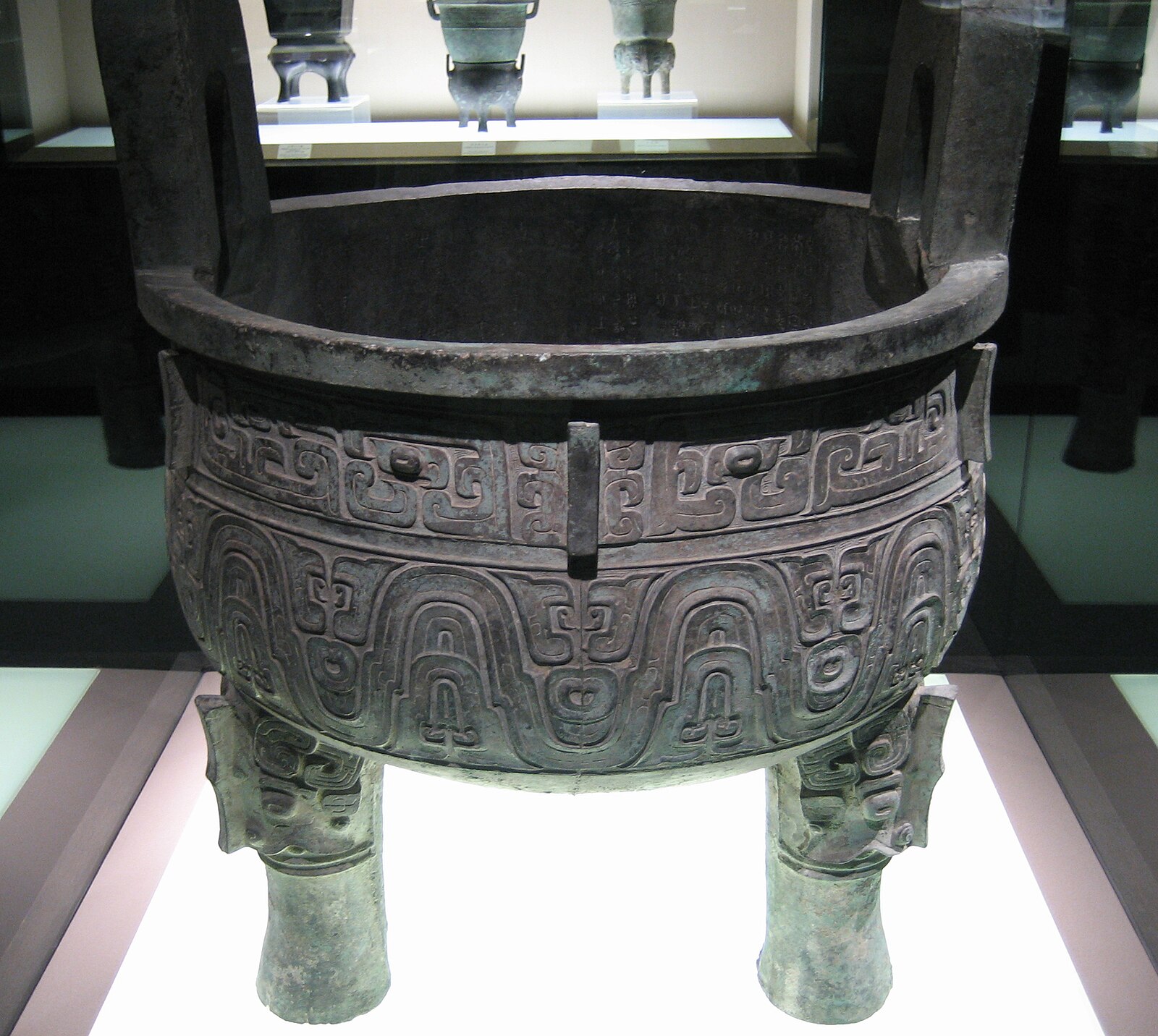
The Connection
The inscribed ritual vessels passed between noble houses in the film mirror the real function of inscribed bronze vessels like the Da Ke Ding in Zhou Dynasty political life.
Read the full story →The Connection
The film's oracle-bone imagery and divination scenes draw from the real Yinxu inscriptions that record Shang royal questions about war, harvest, weather, and ancestors.
Read the full story →
The Connection
Although the film is set in the Shang-Zhou transition, modern viewers often read its world of omens, mandate, and cosmic change through later classics such as the I Ching.
Read the full story →
The Connection
Lady Fuhao's verified military and ritual status provides a real archaeological counterpart to the film's powerful Shang court figures.
Read the full story →Related Themes

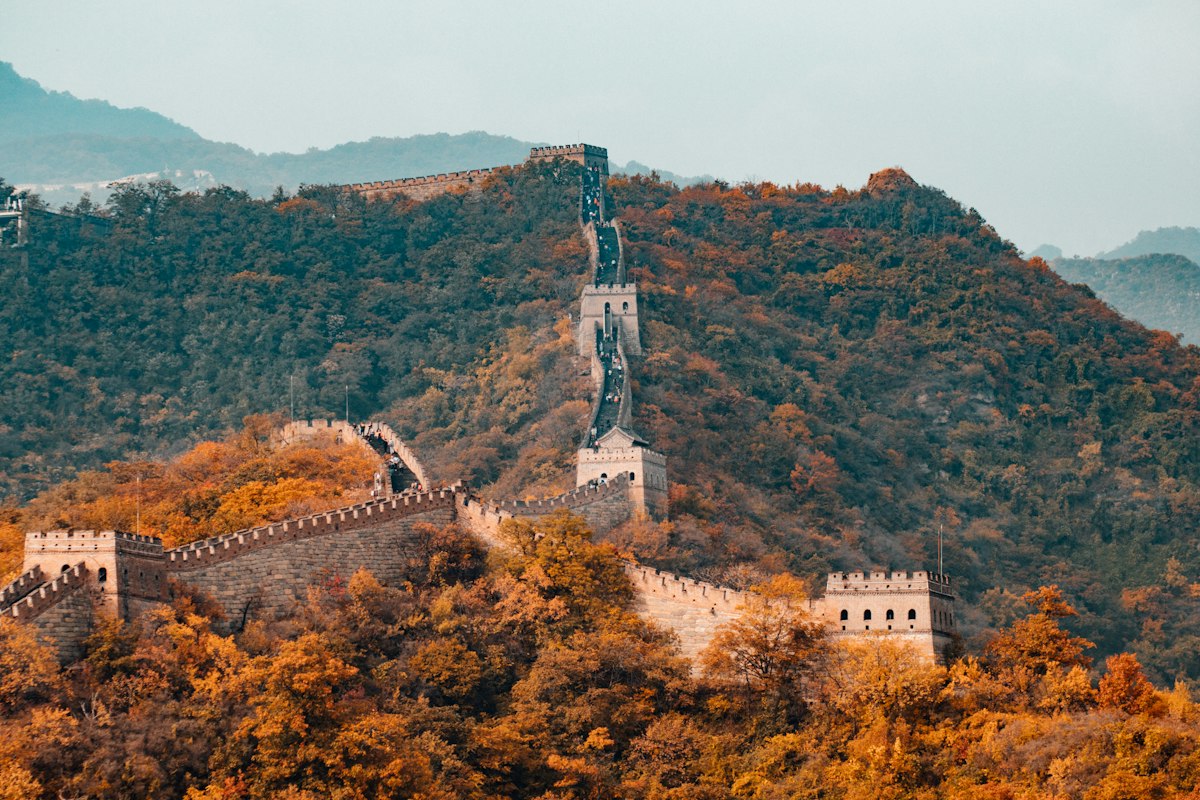
Bronze Dings Through the Ages
The ritual cauldrons that embodied Chinese state power
The ding (鼎) — a three- or four-legged bronze cauldron — was not just a cooking vessel. For 2,000 years, it was the political and spiritual symbol of Chinese civilization itself.
3 artifacts →
Imperial Power and Court Life
How objects made authority visible inside the palace
From bronze cauldrons and jade suits to porcelain vases and court paintings, imperial China turned objects into a language of rank, legitimacy, and ritual performance.
5 artifacts →
Warriors, Weapons, and Empire
The material culture of conquest, defense, and military memory
Chinese military heritage is not only swords and soldiers. It includes bronze technology, mass production, tomb armies, court ritual, and the stories later dynasties told about heroic violence.
5 artifacts →

Oracle Bones & Shang Writing
The Oldest Chinese Sentences We Can Still Read
Oracle bones from Yinxu preserve the earliest large body of Chinese writing — royal questions burned into turtle shells and ox bones more than 3,000 years ago.
3 artifacts →

I Ching, Oracle Bones & Chinese Divination
From turtle shells to hexagrams: the artifact history behind the Book of Changes
The modern fascination with the I Ching and Chinese divination has a deep archaeological record: Shang oracle bones, Han silk manuscripts, and later instruments that turned change, time, and direction into readable signs.
4 artifacts →
Frequently asked questions
What real Chinese artifacts inspired Creation of the Gods I: Kingdom of Storms?+
Creation of the Gods I: Kingdom of Storms draws on multiple real Chinese artifacts and traditions, most notably: Simuwu Ding (Houmuwu Ding), Da Ke Ding (Large Ke Tripod), Oracle Bones of Yinxu, Mawangdui Silk Manuscript of the I Ching, Owl-Shaped Zun of Lady Fuhao. Each is documented in a Chinese museum and many are visible to the public today. See the connections section above for specific scene-by-scene references.
Where can I see the artifacts that inspired Creation of the Gods I: Kingdom of Storms?+
The artifacts referenced by Creation of the Gods I: Kingdom of Storms are held by: National Museum of China, Shanghai Museum, Yinxu Museum, Hunan Provincial Museum. Most have public galleries with regular visitor hours; a few have travelled to international exhibitions.
Who created Creation of the Gods I: Kingdom of Storms?+
Creation of the Gods I: Kingdom of Storms was developed by Beijing Culture and released in 2023. It is a film produced in China.
Is Creation of the Gods I: Kingdom of Storms historically accurate?+
Creation of the Gods I: Kingdom of Storms is a creative work, not a documentary. It draws inspiration from real Chinese material culture but adapts and dramatises freely. Our role at China Heritage is to identify which historical references the work is drawing on, with citations to museum primary sources, so curious viewers can separate the historical core from the creative invention.
Where can I learn more about Chinese material culture beyond Creation of the Gods I: Kingdom of Storms?+
Browse our Topics index for cross-museum themes (bronze ritual, jade and immortality, blue-and-white porcelain) and our Treasures Abroad index for the 28 great Chinese masterpieces in Western museum collections. Each theme links back to specific artifacts you can read about in detail.