Blue-and-White Porcelain Plum Vase (Xiao He Chases Han Xin)
The crown jewel of Yuan Dynasty porcelain — a meiping vase depicting the dramatic story of Xiao He's midnight chase to retrieve the brilliant general Han Xin.

The Story
This meiping (plum vase) is universally regarded as the finest piece of Yuan Dynasty blue-and-white porcelain in existence. Its surface tells a complete narrative: the story of Xiao He, prime minister of the early Han Dynasty, racing on horseback through the moonlit night to catch Han Xin, a military genius who was leaving in frustration. Xiao He's successful persuasion of Han Xin to return proved pivotal — Han Xin went on to lead the Han armies to decisive victories, establishing the Han Dynasty. The vase's painting is extraordinarily dynamic, with flowing robes, galloping horses, and a landscape rendered in masterful brushwork that rivals the finest scroll paintings. Only three Yuan blue-and-white meiping vases with narrative scenes are known to exist worldwide.
Why It Matters
Considered the single most valuable piece of Yuan Dynasty porcelain, it represents the birth of the blue-and-white aesthetic that would dominate world ceramics for centuries.
Frequently Asked Questions
1. What is Blue-and-White Porcelain Plum Vase (Xiao He Chases Han Xin)?
The crown jewel of Yuan Dynasty porcelain — a meiping vase depicting the dramatic story of Xiao He's midnight chase to retrieve the brilliant general Han Xin.
2. When was Blue-and-White Porcelain Plum Vase (Xiao He Chases Han Xin) made?
Blue-and-White Porcelain Plum Vase (Xiao He Chases Han Xin) dates to c. 1271–1368 AD, during the Yuan Dynasty.
3. Where can I see Blue-and-White Porcelain Plum Vase (Xiao He Chases Han Xin)?
Blue-and-White Porcelain Plum Vase (Xiao He Chases Han Xin) is held by Nanjing Museum in China. Check the linked collection record or museum website before visiting because display rotations can change.
4. Why is Blue-and-White Porcelain Plum Vase (Xiao He Chases Han Xin) important?
Considered the single most valuable piece of Yuan Dynasty porcelain, it represents the birth of the blue-and-white aesthetic that would dominate world ceramics for centuries.
5. What is Blue-and-White Porcelain Plum Vase (Xiao He Chases Han Xin) made of?
Blue-and-White Porcelain Plum Vase (Xiao He Chases Han Xin) is classified as ceramics and made of Porcelain with cobalt blue underglaze.
Fun Facts
One of only 3 known Yuan narrative blue-and-white meiping vases in the world
Estimated insurance value exceeds hundreds of millions of RMB
The story it depicts helped establish the 400-year Han Dynasty
Yuan blue-and-white porcelain was originally made primarily for Middle Eastern export markets
Where to See It
Public collections holding this artifact or closely related pieces.
In Popular Culture
Modern games, films, and TV shows that draw on this artifact.

The Connection
Liyue Harbor's household decor, vendor items, and event rewards are saturated with blue-and-white porcelain patterns descended from Yuan-Ming Jingdezhen traditions.
The Connection
Blue-and-white porcelain appears as tableware, decor, and gift items throughout the series, consistent with the Qing imperial passion for Yuan and Ming porcelain.
Part of These Themes
Blue-and-White Porcelain Masterpieces
The ceramic tradition that conquered the world
Cobalt blue on white porcelain became the first truly global luxury good — from Yuan China to Ottoman palaces, Dutch still lifes, and Delft kilns.
1 artifact →
Imperial Power and Court Life
How objects made authority visible inside the palace
From bronze cauldrons and jade suits to porcelain vases and court paintings, imperial China turned objects into a language of rank, legitimacy, and ritual performance.
5 artifacts →
Music, Ritual, and Performance
Sound, ceremony, and spectacle from Bronze Age courts to Tang banquets
Ancient Chinese performance culture linked music, ritual, drinking, procession, and court display into a single sensory world preserved in bells, cups, paintings, and tomb goods.
4 artifacts →
Song City Life and Painting
Markets, bridges, scrolls, and the invention of urban China
The Song dynasty made everyday life worthy of monumental art. Its scrolls preserve streets, bridges, shops, boats, workers, and festival crowds with astonishing documentary density.
3 artifacts →

Mythic Animals and Cosmic Order
Dragons, beasts, trees, masks, and the invisible structure of the universe
Chinese art repeatedly turns animals and hybrid beings into maps of the cosmos — from Sanxingdui birds and bronze masks to Shang taotie, jade beasts, and porcelain dragons.
6 artifacts →
The Forbidden City & Imperial Collections
600 Years of Power, Art, and Architecture Behind Vermilion Walls
The Forbidden City held the imperial throne for 24 emperors across two dynasties and today houses 1.8 million artifacts — the most comprehensive collection of Chinese art and the world's most visited museum.
4 artifacts →
Related Artifacts
Jade & Gemstone
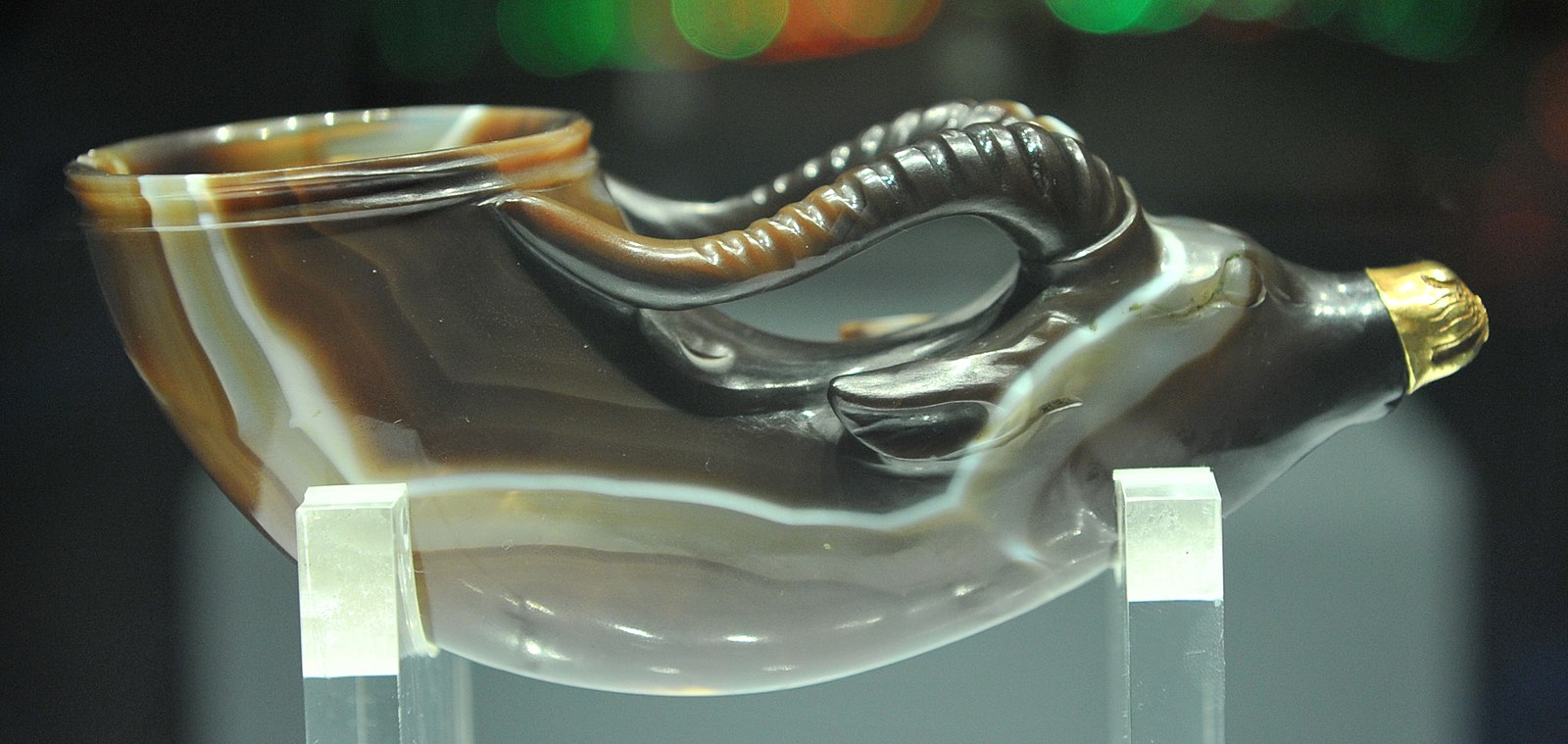
Beast-Head Agate Cup
An exquisite agate rhyton carved into a bull's head — a masterpiece reflecting the cultural fusion of the Silk Road's golden age.
Bronze
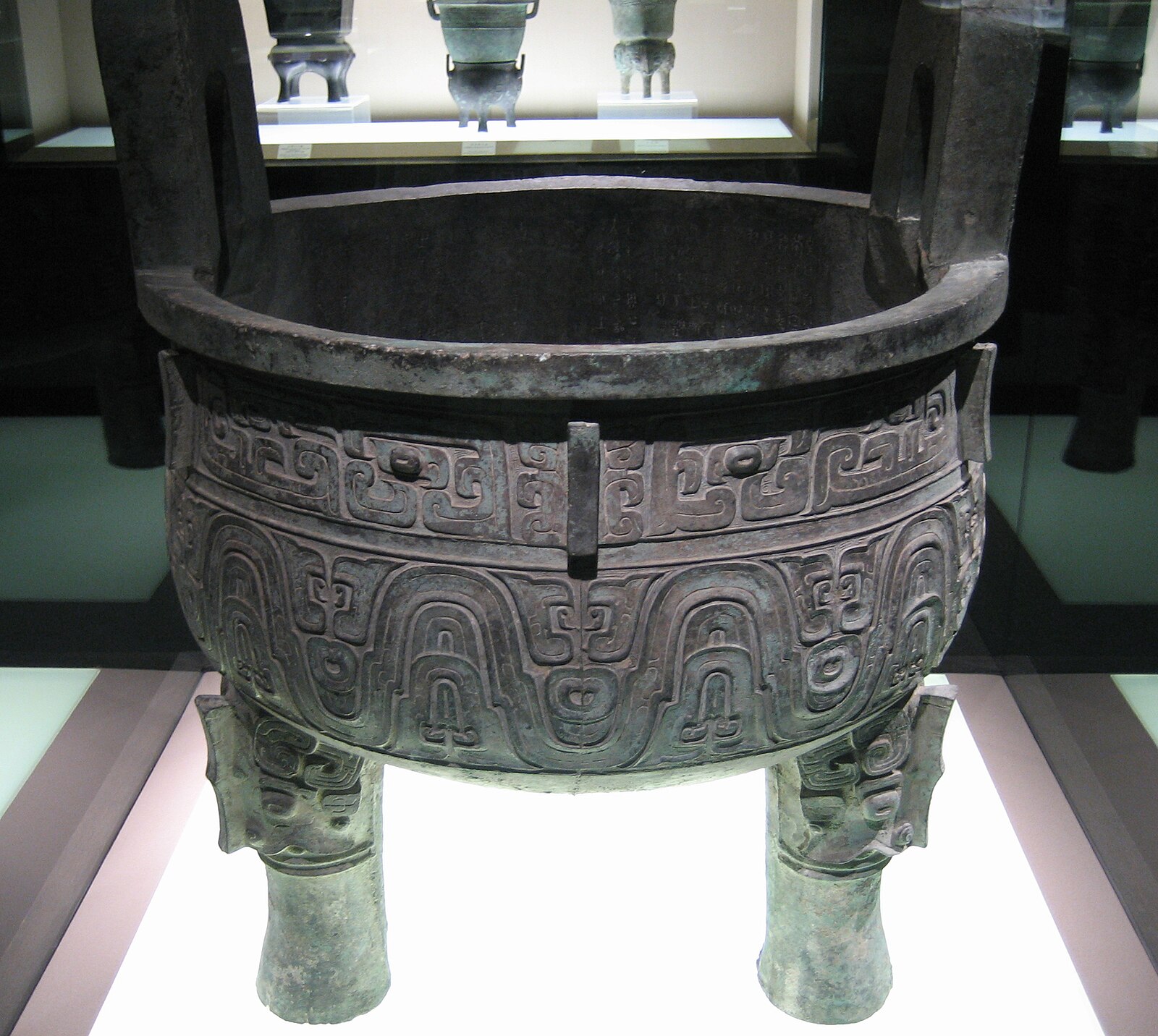
Da Ke Ding (Large Ke Tripod)
One of the most important inscribed bronze vessels of the Western Zhou Dynasty, bearing 290 characters that document a key moment in Chinese feudal history.
Sources & References
- ·Wikipedia — Blue and white pottery(CC-BY-SA 3.0)
Content informed by the sources above. Where Wikipedia text is used, it is licensed under CC-BY-SA 3.0.