Beast-Head Agate Cup
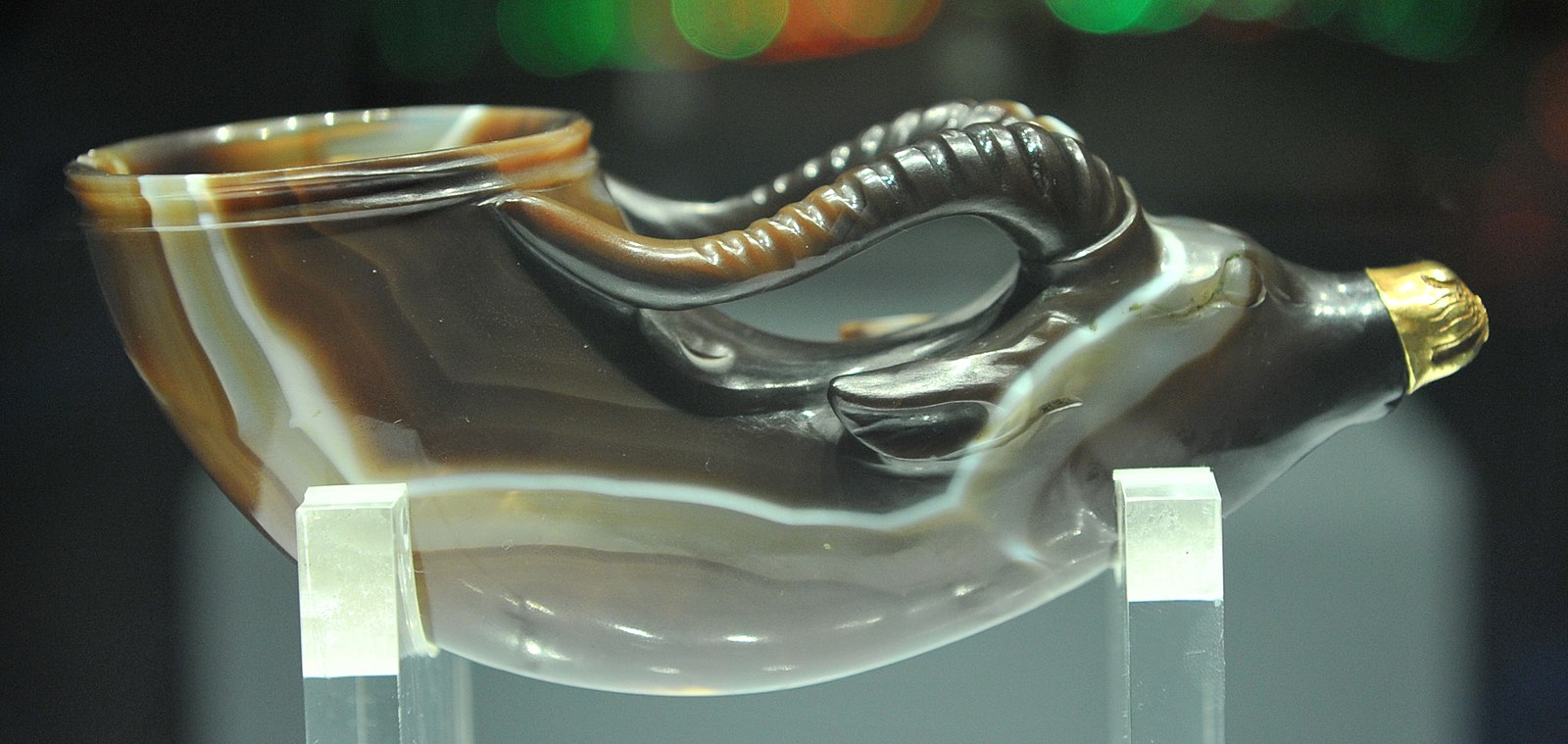
An exquisite agate rhyton carved into a bull's head — a masterpiece reflecting the cultural fusion of the Silk Road's golden age.
The Story
This extraordinary cup, carved from a single piece of rare banded agate, takes the form of a rhyton — a drinking vessel ending in an animal head, a form that originated in ancient Persia and Greece. The bull's head at the base features a removable gold stopper in its mouth, through which wine could be poured. The cup embodies the Tang Dynasty at its most cosmopolitan: Chinese craftsmanship meeting Central Asian design through the cultural superhighway of the Silk Road. Its flawless execution — exploiting the natural color banding of the agate to create the illusion of fur — represents the pinnacle of Tang lapidary art. It is one of the eight treasures prohibited from leaving China.
Why It Matters
A tangible symbol of Silk Road cultural exchange, and one of only a handful of Chinese artifacts permanently banned from overseas exhibition due to its irreplaceable value.
Frequently Asked Questions
1. What is Beast-Head Agate Cup?
An exquisite agate rhyton carved into a bull's head — a masterpiece reflecting the cultural fusion of the Silk Road's golden age.
2. When was Beast-Head Agate Cup made?
Beast-Head Agate Cup dates to 618–907 AD, during the Tang Dynasty.
3. Where can I see Beast-Head Agate Cup?
Beast-Head Agate Cup is held by Shaanxi History Museum in China. Check the linked collection record or museum website before visiting because display rotations can change.
4. Why is Beast-Head Agate Cup important?
A tangible symbol of Silk Road cultural exchange, and one of only a handful of Chinese artifacts permanently banned from overseas exhibition due to its irreplaceable value.
5. What is Beast-Head Agate Cup made of?
Beast-Head Agate Cup is classified as jade & gemstone and made of Banded agate with gold fitting.
Fun Facts
It is one of China's national treasures permanently banned from leaving the country
Carved from a single piece of natural banded agate
The rhyton form originated in Persia/Greece — proving Silk Road cultural exchange
The gold bull nose doubles as a functional wine stopper
Where to See It
Public collections holding this artifact or closely related pieces.
In Popular Culture
Modern games, films, and TV shows that draw on this artifact.
The Connection
Liyue's fusion of Chinese and Central Asian visual motifs echoes real Tang Silk Road artifacts — the beast-head agate rhyton being one of the most iconic surviving examples.
The Connection
The film's courtly banquet and gift-giving vocabulary fits the long history of Chinese luxury objects shaped by Silk Road exchange, represented here by the Tang beast-head agate cup.
The Connection
Animal-shaped luxury objects such as the Tang beast-head agate cup show how Chinese art repeatedly transformed beasts into vessels of status and story.
Part of These Themes

Tang Dynasty Silk Road Treasures
When Chang'an was the most cosmopolitan city on Earth
For three centuries, the Tang capital of Chang'an absorbed Persian silver, Sogdian music, Indian Buddhism, and Byzantine gold — and produced artifacts that fused them all.
1 artifact →
Music, Ritual, and Performance
Sound, ceremony, and spectacle from Bronze Age courts to Tang banquets
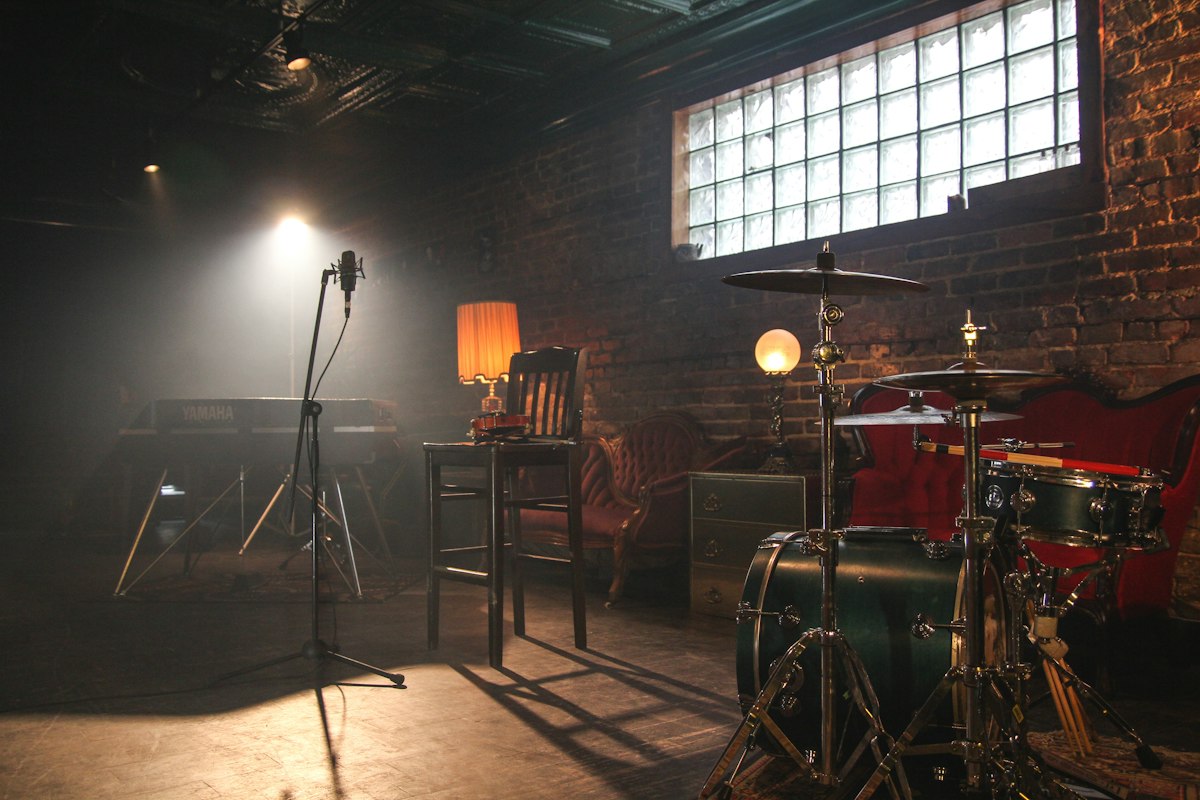
Ancient Chinese performance culture linked music, ritual, drinking, procession, and court display into a single sensory world preserved in bells, cups, paintings, and tomb goods.
4 artifacts →
Song City Life and Painting
Markets, bridges, scrolls, and the invention of urban China
The Song dynasty made everyday life worthy of monumental art. Its scrolls preserve streets, bridges, shops, boats, workers, and festival crowds with astonishing documentary density.
3 artifacts →
Mythic Animals and Cosmic Order
Dragons, beasts, trees, masks, and the invisible structure of the universe
Chinese art repeatedly turns animals and hybrid beings into maps of the cosmos — from Sanxingdui birds and bronze masks to Shang taotie, jade beasts, and porcelain dragons.
6 artifacts →

Dunhuang Cave Art & the Silk Road
A Millennium of Buddhist Murals at the Edge of the Desert
The Mogao Caves at Dunhuang contain over 45,000 square meters of murals spanning 1,000 years — the world's greatest single collection of Buddhist art and a visual record of Silk Road cultural exchange.
3 artifacts →
Related Artifacts

Sources & References
Content informed by the sources above. Where Wikipedia text is used, it is licensed under CC-BY-SA 3.0.